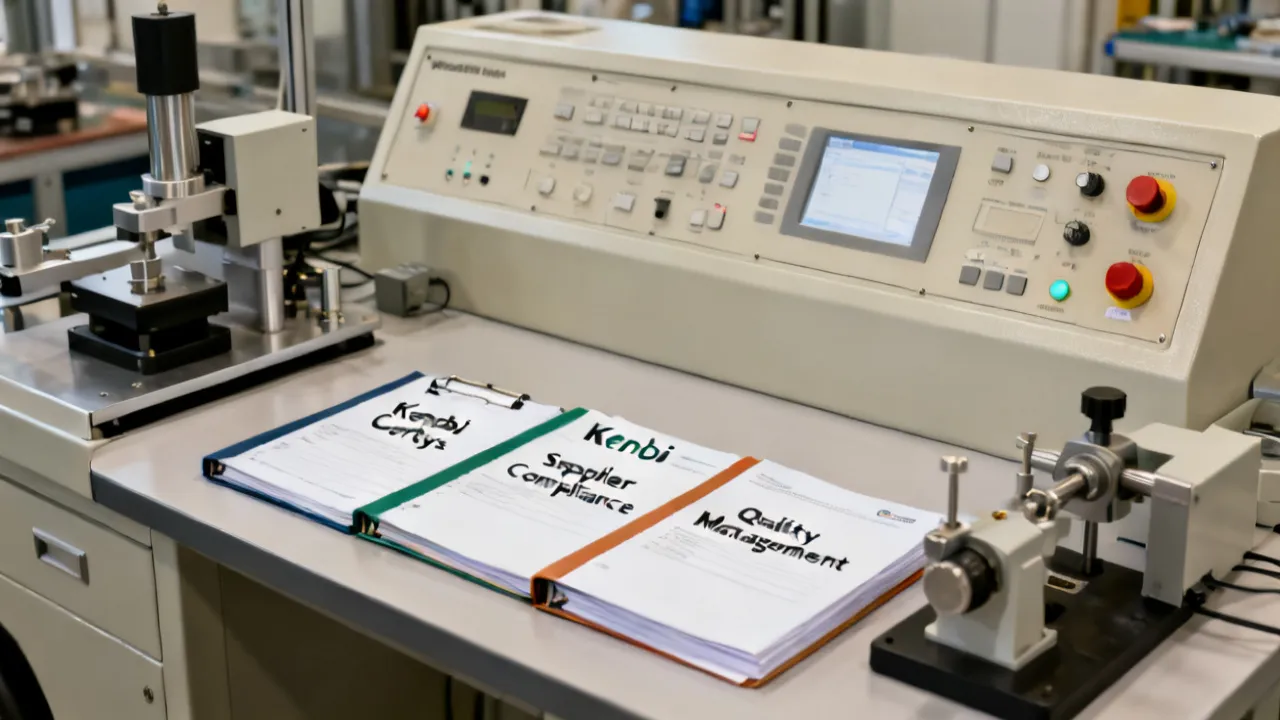
Kenobi Certsys: Operational Compliance for Secure Certification
This guide explains how Kenobi Certsys supports structured, auditable certification operations and governance. It outlines what “Kenobi Certsys” typically covers from a compliance and supplier-management perspective, then compares implementation approaches, prerequisites, and decision conditions. Finally, it addresses common questions readers ask when assessing documentation, controls, and ongoing maintenance.

Executive overview: why Kenobi Certsys matters for certification governance
Kenobi Certsys is often understood as a structured framework for running certification activities with clear documentation, traceability, and operational controls. In practical terms, it helps organizations treat certification work as an auditable process rather than an ad-hoc set of tasks—aligning stakeholders, reducing ambiguity in evidence handling, and strengthening confidence in outcomes.
From an industry expert’s viewpoint, the value is rarely in a single document; it’s in how the system standardizes workflows across teams (operations, quality assurance, compliance, and supplier coordination). When executed well, Kenobi Certsys-style governance enables faster internal review, more consistent evidence collection, and clearer accountability when requirements change.
Because certification operations typically span multiple responsibilities—policy interpretation, evidence readiness, review cycles, approvals, and audit response—the central challenge is maintaining coherence. Kenobi Certsys addresses that coherence by making “what is required,” “who does what,” and “how evidence is verified” easier to manage and repeat.
Key outcomes you can expect when Kenobi Certsys is implemented thoughtfully: improved traceability of decisions, reduced risk of missing evidence, consistent handling of stakeholder requests, and a more defensible posture during internal or external reviews.
Additionally, robust Kenobi Certsys governance tends to improve operational predictability. Teams spend less time searching for files, chasing clarification, or reconciling conflicting versions. Reviewers can spend more time evaluating the substance of evidence rather than verifying basic administrative completeness. This matters because, in certification environments, the “last mile” of documentation often determines whether a project slips, whether an approval is delayed, or whether an audit response becomes stressful.
Kenobi Certsys also supports learning and continuous improvement. When workflows and evidence expectations are standardized, gaps become easier to diagnose. Instead of treating each certification cycle as a new reinvention, organizations can quantify common failure modes—such as missing metadata, weak traceability links, or inconsistent reviewer sign-off—and then refine templates, controls, and training.
Finally, Kenobi Certsys strengthens accountability. When roles and stage-gates are defined, it becomes clear where responsibility sits for interpretation, evidence readiness, verification checks, and approvals. That clarity reduces the typical “everyone thought someone else handled it” pattern that often emerges during high-pressure deadlines or complex supplier collaborations.
What “Kenobi Certsys” commonly refers to in certification operations
Although organizations use the name “Kenobi Certsys” in different ways, the underlying concept is usually consistent: it supports secure and auditable certification operations by standardizing workflow steps, document control practices, and verification logic.
In very real-world environments, certification-related work involves:
- Requirement interpretation: translating technical or regulatory obligations into actionable criteria.
- Evidence management: collecting, storing, and versioning proof artifacts (reports, test results, declarations, audit notes).
- Review and sign-off: structured checks by qualified roles (e.g., QA/compliance reviewers) and approved outcomes.
- Change control: handling updates to standards, project scope, or supplier inputs without losing traceability.
- Audit readiness: ensuring the organization can demonstrate “how the work was done,” not just “what the result was.”
Kenobi Certsys fits into this picture as an operational governance approach that emphasizes reproducibility and defensible documentation. The aim is not merely to create documentation; it is to ensure documentation is complete, correctly mapped, and aligned with the process that produced the certification claim.
In many organizations, “Kenobi Certsys” becomes shorthand for a set of operating habits and artifacts. These may include a certification workflow map, evidence matrices (requirement-to-evidence mappings), templates for evidence submission, a record-keeping and retention plan, and defined verification steps (for example, review by qualified staff, checks for version correctness, and approvals for exceptions).
Because certification is often cross-functional, Kenobi Certsys also typically clarifies interfaces. For example, it may specify what suppliers must deliver, when internal teams must validate that submissions meet expected metadata requirements, and how internal review decisions are documented for later retrieval.
Some organizations implement Kenobi Certsys primarily as a process model (who does what, in what sequence, with what controls). Others implement it as a “system” with tooling support—ticketing, document repositories, audit checklists, or evidence tracking dashboards. Regardless of the tooling, the governance logic remains central: traceability, verification discipline, and consistent handling of evidence and decisions.
Why structured certification governance is a competitive advantage
Many organizations treat certification as a discrete project phase. Expert practice shows certification is better managed as an operational capability—especially when the organization must certify repeatedly (new product batches, new supplier lots, expanded product lines, or recurring compliance cycles).
When certification work becomes repeatable, organizations typically experience:
- Lower coordination friction: fewer misunderstandings about what evidence is required at each stage.
- Faster review cycles: reviewers get consistent evidence packages and clear context.
- More reliable outcomes: requirements are tracked systematically, reducing the likelihood of overlooked constraints.
- Better supplier alignment: suppliers receive clearer expectations about documentation and formats.
These are operational benefits that often compound over time, particularly for regulated industries or environments with frequent audit interactions.
Structured governance creates a “certification delivery system” rather than a one-time “certification scramble.” That shift can become a measurable differentiator: organizations can respond to customer and regulator requests with less disruption, provide faster updates when standards evolve, and maintain a credible assurance story across multiple product families.
From a commercial perspective, faster and more predictable certification timelines can translate into reduced working capital tied up in delays, fewer production stoppages, and improved customer confidence. While certification is often perceived as a compliance cost, consistent governance can reduce that cost by reducing rework, minimizing negotiation cycles with certification bodies, and limiting the number of “evidence gaps” discovered late in the process.
Structured governance also supports cross-project scalability. Without a standardized approach, teams often replicate local workarounds for each new project, which increases overhead and creates hidden risks. With Kenobi Certsys-style discipline, improvements can be rolled out across projects, and knowledge is retained in process assets rather than residing only in individuals’ memory.
Moreover, governance can improve risk management. In certification, risk is not only about whether a standard is met; it’s also about whether your organization can defend that claim if challenged. Kenobi Certsys-style governance aims to ensure that evidence is not merely collected but verifiably connected to requirements, review steps, and decision rationales.
Process design perspective: where certification workflows typically fail
To understand Kenobi Certsys-style governance, it helps to examine common failure points in certification operations:
- Evidence ambiguity: teams may collect documents that are technically relevant but not mapped to explicit requirements.
- Unclear ownership: when responsibilities are not defined, evidence readiness stalls and approvals become bottlenecked.
- Weak version control: the “right” version of a report might not be the one included in the final package.
- Audit response gaps: during reviews, teams struggle to explain decisions because the reasoning trail is incomplete.
- Inconsistent supplier submissions: supplier documents arrive in different formats or with missing metadata.
Kenobi Certsys-style operating principles directly address these points by emphasizing standardization, traceability, and repeatable review logic.
However, the root causes behind these failure points often go deeper than paperwork issues. For example, evidence ambiguity can result from requirement statements that are not translated into clear acceptance criteria. Weak version control can stem from uncontrolled file-sharing practices or inconsistent naming conventions. Audit response gaps can occur when evidence exists but reviewer rationales are stored in email threads or undocumented meetings.
Unclear ownership can be particularly harmful because it creates “control vacuum” moments. If no role owns the end-to-end readiness of an evidence package, then each team may assume the other team will check completeness. The result is late-stage discovery of missing artifacts or missing traceability links.
Inconsistent supplier submissions can create downstream instability. If suppliers cannot provide evidence in a predictable structure, internal reviewers spend more time normalizing and interpreting documents rather than evaluating compliance substance. In highly regulated contexts, that normalization time can be a risk itself: misinterpretation of a document’s scope or applicability can lead to incorrect conclusions.
Another common failure mode is “policy drift.” Certification governance relies on interpreting requirements correctly. If different teams interpret the same requirement differently—without a centralized interpretation record—then evidence mapping may become inconsistent across product lines or certification cycles. Kenobi Certsys-style governance typically includes mechanisms to standardize interpretation and ensure interpretation decisions are traceable.
Yet another issue is “approval latency.” Even when evidence is present, approvals can be delayed if review SLAs are unclear or if reviewers don’t know what they’re expected to verify. Kenobi Certsys-style workflows usually include stage gates and explicit verification tasks so that review steps are purposeful and time-bound.
How to evaluate Kenobi Certsys readiness in your organization
Before adopting a Kenobi Certsys approach, experts typically recommend assessing process maturity rather than only focusing on tooling. Questions that matter include:
- Do you already have requirement-to-evidence mapping? If not, you’ll need a structured mapping layer.
- Can you demonstrate traceability end-to-end? From initial requirement interpretation to final approval.
- Are roles and approvals clearly defined? Who reviews? Who signs off? Who handles exceptions?
- How do you manage document versions and retention? Certification evidence usually needs disciplined lifecycle control.
- Do suppliers follow a predictable evidence submission pattern? Without it, internal review time increases.
When these fundamentals are strong, implementing Kenobi Certsys becomes less about “starting from scratch” and more about tightening governance.
A more mature Kenobi Certsys implementation is often evidenced by behaviors rather than artifacts alone. For example, consider whether teams can answer quickly: “Where is the evidence for requirement X, and which version is it?” If the answer takes days, governance gaps likely exist in document control, evidence indexing, or mapping structures.
Readiness evaluation can also include measuring how often exceptions occur. If many certifications require manual adjustments due to missing evidence or unclear applicability, then you likely need stronger templates, better submission guidance, and clearer verification tasks.
It’s also important to consider the “organizational memory” problem. If key governance knowledge (interpretation decisions, mapping logic, evidence acceptance rationale) lives mostly in individuals’ understanding, then the system is fragile. Kenobi Certsys readiness improves when those decisions are documented and reusable.
Finally, evaluate the organization’s audit posture. Even internal audits can reveal whether evidence is truly mapped and retrievable. An audit simulation can uncover whether reviewers can follow the logic chain from requirement to evidence to approval without relying on personal recollections.
Industry expert comparison supplement (no links): approaches, sources, steps, and requirements
The table below compares typical implementation approaches for Kenobi Certsys-style certification governance using general industry practices. It does not assume a single universal setup; organizations should tailor based on their audit expectations and internal risk profile.
| Dimension | Approach A: Workflow Standardization First | Approach B: Evidence Control First | Approach C: Audit Simulation First |
|---|---|---|---|
| Primary goal | Align roles, steps, and review logic across teams. | Ensure evidence is correctly versioned, mapped, and retrievable. | Validate readiness by testing documentation completeness and response flow. |
| Top fit conditions | When teams have inconsistent handoffs or unclear approval paths. | When review delays come from document confusion or mismatched artifacts. | When you have an upcoming internal audit, external assessment, or recurring compliance cycle. |
| Suggested sources (practice references) | Quality management system guidance (e.g., ISO-style process thinking) and internal policy documents. | Document control and record-keeping top practices commonly used in regulated environments. | Audit planning methods and mock-audit checklists used by QA and compliance teams. |
| Step-by-step guide (simplified) |
|
|
|
| Conditions/requirements | Clear ownership for approvals, stable requirement interpretation, and agreed exception handling. | Consistent document naming/versioning standards, controlled access, and disciplined record retention. | Representative sample coverage, reviewer availability, and authority to correct gaps promptly. |
In practice, organizations often blend approaches. For instance, they might start with evidence control because evidence is already chaotic, then later formalize workflow stages, and finally use audit simulations to validate the end-to-end chain. The key is to ensure that improvements reinforce each other rather than creating overlapping or conflicting control layers.
Approach A (workflow standardization first) tends to reduce “handoff errors.” It clarifies what needs to happen when, which role checks what, and what constitutes readiness to proceed to the next stage. However, if evidence control is weak from the beginning, workflow standardization can still produce confusion—stages are clear, but evidence may be incorrect or difficult to retrieve.
Approach B (evidence control first) reduces document chaos, but it can leave gaps if the organization doesn’t know which evidence matters most, who should review it, and how to document verification rationale. Evidence control without clear review logic can lead to “paper compliance”—evidence exists but is not defensibly connected to decisions.
Approach C (audit simulation first) is often the fastest way to show leadership where risks are. It can reveal missing metadata, insufficient traceability links, and unclear exception handling. The downside is that it can be too reactive if used as the only method; audit simulations can improve readiness for one or two scenarios but fail to establish sustainable operational consistency unless workflow and evidence systems are also addressed.
A practical implementation plan might therefore include a first pilot cycle that uses audit simulation outputs to refine workflow stages and evidence templates. Over time, the organization can move from reactive remediation to a steady state where certification outcomes become predictable and audit-ready by default.
Operational integration: aligning supplier documentation with Kenobi Certsys
Certification governance often becomes difficult at supplier boundaries. Kenobi Certsys-style systems tend to succeed when suppliers are treated as part of the operational workflow—not merely external contributors.
Common expert practices include:
- Standardized evidence templates: so submissions include the same metadata and context each time.
- Requirement tagging: mapping supplier outputs to internal criteria.
- Submission deadlines and escalation paths: to prevent late-stage evidence scrambling.
- Controlled change communication: informing the organization when suppliers modify processes, materials, or test methods.
When supplier evidence is consistent and mapped to requirements, internal review becomes faster and less subjective.
Supplier alignment is not only about formatting; it’s also about expectation clarity and “evidence intent.” For example, suppliers may provide test reports that appear relevant, but the tests may not cover the specific variants, usage conditions, or configuration for the certified product. A Kenobi Certsys-style evidence mapping helps internal teams verify scope alignment before they rely on the evidence.
Standardized evidence templates often include fields like: product model identifier, configuration version, testing standard reference, test date, laboratory accreditation status, test method version, applicable clauses or requirements, and limitations/assumptions. When these metadata are present, internal reviewers can rapidly determine whether the submission supports the requirement claim.
Requirement tagging is equally important. Without tags, evidence mapping depends on interpretation by internal staff, which can vary and create audit vulnerability. Tagging encourages supplier submissions to explicitly state which requirements or clauses they address.
Submission deadlines and escalation paths prevent “last minute evidence compression.” In many certification programs, the final evidence packaging occurs late, and suppliers miss internal deadlines because they are not integrated into the governance calendar. Kenobi Certsys-style systems typically define submission windows tied to internal stage gates and clarify who to contact if evidence is delayed or incomplete.
Controlled change communication ensures traceability when the supplier modifies anything that could affect compliance. For example, a supplier may substitute a material or update a process step. If those changes occur without formal notification, previously accepted evidence may no longer be valid. A governance model aligned with Kenobi Certsys usually defines triggers for supplier change notifications and describes internal assessment steps to determine whether re-testing or evidence updates are required.
Another supplier integration element is the “feedback loop.” When internal reviewers reject submissions due to missing metadata or mismatched scope, organizations should share specific remediation guidance rather than simply stating “not sufficient.” Over multiple cycles, this feedback loop improves supplier submissions and reduces cycle time.
Governance, controls, and traceability: what auditors usually look for
Auditors typically focus less on “whether you have paperwork” and more on whether the organization can:
- Demonstrate that evidence supports the claimed outcome.
- Explain the review and approval process with clear rationale.
- Show how changes were managed without breaking traceability.
- Provide a reliable path to retrieve records when questioned.
In Kenobi Certsys terms, that means governance must be visible: stage gates, reviewer roles, evidence mapping, and documented handling of exceptions.
To prepare for auditor questions, organizations should anticipate where “challenge points” usually emerge. Common challenge points include: the applicability of test evidence to a specific product variant, the integrity of evidence versions, the completeness of requirement coverage, and whether exceptions were handled according to a defined and approved process.
Auditors may ask, for example, “How do you know this test report corresponds to the certified configuration?” This question is answered by traceability: configuration identifiers, mapping references, and evidence verification steps.
They may also ask, “How do you ensure that the review was performed by authorized personnel?” Here, role definitions, reviewer credentials/qualifications (where relevant), and documented sign-offs matter.
They may ask, “If a standard changes, how do you assess which parts of your prior certification are impacted?” A Kenobi Certsys-style change control module should document impact assessment steps, evidence update requirements, and how decisions are recorded.
Auditors also look at whether governance is consistent over time. A system that works once but fails during the next certification cycle suggests that controls are dependent on individuals rather than operational design. Kenobi Certsys aims to reduce that dependence.
Traceability is often judged not only by the presence of links but also by the stability and clarity of those links. For example, if traceability is captured in free-form documents that are hard to search or are missing key identifiers, then retrieving the record chain can become difficult. Traceability should therefore be structured enough to be retrievable under time pressure.
Exception handling is another major area. In realistic certification programs, exceptions occur: evidence may be incomplete, or some requirement interpretation may require clarification. Auditors expect that exceptions are assessed, approved, time-limited or controlled where needed, and documented with rationale. Kenobi Certsys governance generally includes explicit exception workflows rather than informal decisions.
Finally, auditors expect record retention discipline. Evidence that disappears after a short period or cannot be retrieved later undermines defensibility. A Kenobi Certsys governance model often defines retention periods and storage control measures. It may also define backup and access control expectations, especially in environments where evidence supports legal or customer commitments.
Cost and pricing discussion (objective framing)
The term “price information” can be interpreted differently depending on whether Kenobi Certsys refers to an internal governance program or a vendor-enabled system. In many organizations, costs are less a single line item and more a combination of implementation, training, operational administration, and periodic review work.
To remain objective and responsible, this guide does not assume a universal cost or publish unverified figures. Instead, expert evaluation typically breaks total cost into:
- Implementation effort: process mapping, document control design, and pilot execution.
- Training and onboarding: time for internal teams and supplier enablement.
- Ongoing governance overhead: periodic audits, exception handling, and continuous improvement.
- Systems and administration: configuration and maintenance of any supporting platforms (if applicable).
For buyers, the top practice is to request a scope-based quotation that specifies what is included (e.g., number of workflows, evidence types, reviewer roles, reporting requirements) and what is out of scope.
When procurement reviews costs, it’s helpful to distinguish between one-time and recurring expenses. One-time expenses often include initial configuration of workflows, creation of templates and evidence matrices, training materials, and pilot facilitation. Recurring costs often include maintaining templates, running audit simulations, performing evidence quality checks, managing supplier submission feedback loops, and updating governance assets when standards change.
It’s also helpful to assess “hidden costs” that are sometimes overlooked. For example, if current systems are manual, shifting to Kenobi Certsys may initially increase time for mapping evidence until templates and controls mature. Over time, cycle time usually improves, but the transition phase must be budgeted and managed carefully.
Another hidden cost can be change management effort. Teams may resist new documentation practices if they’re perceived as extra work. Effective adoption requires onboarding that explains not only what to do, but why the steps exist—especially how governance prevents rework and reduces audit risk.
When evaluating vendor services (if relevant), buyers should ask how the vendor ensures alignment with their audit requirements and risk profile. A vendor can provide tools, but governance success depends on correct configuration, correct templates, and fit-to-purpose review logic.
Procurement should also clarify deliverables and acceptance criteria. For instance, what constitutes successful implementation? Is it “templates created,” “pilot completed,” “traceability validated across X scenarios,” or “internal audit simulation passed”? Clear acceptance criteria prevent cost disputes and reduce delivery ambiguity.
Supplier details and procurement due diligence
When considering Kenobi Certsys through a supplier or service partner, procurement due diligence should evaluate:
- Demonstrated experience: comparable certification governance engagements and references.
- Evidence handling capability: how the supplier ensures version control, traceability, and record lifecycle discipline.
- Integration approach: how certification workflows connect with your existing document systems and review processes.
- Security and access controls: who can access what evidence, and how changes are audited.
- Support model: escalation paths, turnaround expectations, and maintenance responsibilities.
This kind of due diligence helps ensure that “Kenobi Certsys” deliverables match your compliance needs—not only a set of documents, but an operating model.
Due diligence should also examine how the partner handles deviations. Certification governance is rarely perfect in practice. A mature partner should show how they manage exceptions, how they document decisions, and how they maintain traceability when evidence is amended or re-generated.
Procurement should request examples of governance artifacts: evidence mapping templates, stage gate definitions, review checklists, and records/retention models. They should also ask how these artifacts are customized for different standards or product categories.
It’s also important to verify the partner’s approach to training. Suppliers and internal teams must understand the evidence submission requirements and the rationale behind them. Training that focuses only on “click here” instructions (if tooling is used) is often insufficient. Training should include practical examples of good and bad submissions, common misunderstandings, and how traceability is validated.
Another area is security. If evidence includes proprietary designs, test methods, or sensitive compliance documents, access control is essential. Due diligence should cover data handling practices, permissions models, audit logs (where relevant), and retention policies consistent with your legal and regulatory expectations.
Finally, confirm responsibility boundaries. If a partner provides a governance system, who owns ongoing maintenance? Who updates templates when standards change? Who ensures that the evidence mapping logic remains current as product lines evolve? Clear ownership prevents governance drift.
Localization note: implementing in “nearby” regional contexts
Where certification operations span multiple teams, local coordination often matters. In “nearby” regions, organizations frequently face similar patterns: variations in supplier readiness, differences in internal documentation habits, and practical language/format differences in evidence submissions. A Kenobi Certsys approach tends to perform better when it includes clear submission templates and reviewer guidance that are easy to apply across local teams.
In regions with strong emphasis on formal process documentation—common in many regulated markets—teams often respond positively to stage-gate checklists, role-based approvals, and audit-simulation exercises.
Localization should not mean weakening governance. Instead, it should focus on translating operational guidance into locally usable forms. For example, evidence templates might be language-neutral (structured fields rather than narrative), making them easier to complete consistently across regions. Reviewer checklists can reference the same evidence mapping logic but provide local examples to reduce misunderstanding.
In multi-region environments, organizations also need to consider time zone coordination and supplier responsiveness. Stage gate deadlines should be realistic for local procurement and testing timelines. If not, governance can inadvertently create bottlenecks that undermine its own purpose.
Additionally, regional regulatory differences may require careful mapping. Even when standards are similar, clause numbering, interpretation, or documentation expectations can differ. Kenobi Certsys-style governance can incorporate a regional criteria mapping layer that adapts evidence expectations without breaking traceability.
Finally, local adoption benefits from coaching. Teams may interpret documentation requirements differently based on prior experience. Practical coaching sessions, short “office hours” with reviewers, and periodic feedback on supplier submission quality can increase consistency across regions.
FAQs
1) What is Kenobi Certsys, in plain terms?
Kenobi Certsys generally describes a structured approach to running certification activities with clear workflow stages, mapped evidence requirements, defined roles for review and approval, and traceability that supports audits or internal reviews.
In plain terms, it’s a way to ensure you can reliably show how your certification claim was supported by evidence—and that the supporting evidence can be found, checked, and explained using a consistent method.
2) Does Kenobi Certsys require specific software?
Not necessarily. The core value is governance: how work is planned, how evidence is collected and verified, and how decisions are documented. Some organizations implement these principles with software support, but the operational logic can also be applied through disciplined documentation workflows.
That said, many organizations eventually benefit from tooling for document control, evidence indexing, approval workflows, and audit trail recording. When tooling is used, it should reinforce governance logic rather than replace it with “clicky compliance.”
3) How do we map requirements to evidence in a Kenobi Certsys-style process?
Typically, organizations define certification stages and then list the evidence artifacts expected for each stage. Evidence mapping becomes a repeatable convention: each artifact is linked to the relevant requirement criteria, including version, scope, and reviewer sign-off status.
In mature implementations, mapping is also maintained as a living structure. If a requirement is clarified, or if a test scope changes, the mapping is updated with rationale and version history so auditors can see how the system maintained correctness.
4) What supplier information is very important for certification readiness?
Suppliers should provide evidence that is complete, versioned, and contextualized: test or assessment reports, declarations, process documentation relevant to the criteria, and metadata that helps internal teams confirm applicability.
Beyond the evidence itself, suppliers should also provide clarity about limitations and assumptions. For example, a report might specify tested configurations but not others; governance mapping should capture these boundaries so internal teams don’t over-claim.
5) How do we control document versions and prevent mismatched evidence?
Expert practice uses controlled record keeping: consistent naming/version rules, retention policies, controlled access, and verification steps that confirm reviewers are using the correct evidence versions mapped to requirements.
Practically, version control should cover both the document files and the mapping records. It’s not enough to ensure the file name is correct; the evidence entry in the mapping system must reference the correct version and record the date of verification and the reviewer.
6) What are common implementation mistakes?
The very common mistakes are treating certification governance as a one-time documentation exercise, failing to define ownership and review responsibilities, and not piloting the workflow against real (or realistic) certification scenarios where exceptions occur.
Another common mistake is assuming that evidence completeness alone equals compliance. Auditors often evaluate traceability and reasoning. If the system doesn’t record why evidence is considered applicable, then the evidence package can be challenged even if all “documents” are present.
7) How should we handle changes in standards or project scope?
A Kenobi Certsys-style approach uses change control: documenting what changed, assessing which evidence or review steps are impacted, and maintaining traceability so auditors can see how the organization ensured compliance under the updated criteria.
Change control should also define impact thresholds. Not every change requires full re-testing; but the decision logic must be documented, reviewed, and traceable.
8) How can we measure whether Kenobi Certsys is working?
Organizations typically track operational indicators such as review cycle efficiency, evidence completeness rates before review, number of exceptions raised and resolved, and audit outcomes. The key is to measure process performance, not just final certification results.
Additional indicators can include traceability success rate (e.g., how often evidence packages are challenged for missing mapping links), time-to-retrieve evidence during internal audit simulations, and supplier submission quality improvements over time.
9) Where can we find reliable references for certification governance practices?
Reliable references include established quality management guidance (such as ISO-style process thinking), formal document control and record-keeping top practices used in regulated sectors, and your internal compliance policies. If you work under specific regulatory regimes, consult the applicable official standards and guidance documents directly.
When interpreting references, organizations should ensure internal mapping aligns with the specific compliance framework used by their certification body or regulatory context. Generic interpretations can create traceability risks.
10) Is Kenobi Certsys mainly about compliance, or also about efficiency?
It’s both. Strong compliance requires repeatable evidence and traceability, which also reduces rework and review friction—creating efficiency benefits. The operational governance that supports audits often improves day-to-day delivery as well.
In practice, efficiency benefits usually become visible after the system matures. Early cycles might require investment in templates and training, but once teams learn the conventions, review cycles typically become faster and more predictable.
Concluding guidance: taking the next step with a pilot mindset
Kenobi Certsys-style governance is very effective when introduced as an operating capability: begin with clear workflow stages, enforce evidence control conventions, and validate readiness through targeted audit simulations. Rather than expecting perfect performance on the first cycle, organizations should pilot in a controlled scope, capture deviations, and refine the process so it becomes reliably repeatable.
If your goal is robust certification outcomes, the strategic focus should remain on traceability, consistent evidence mapping, and accountable review steps—because those elements are what make certification defensible and operationally manageable.
To operationalize the pilot, many teams start by selecting a certification scenario that is representative but not “easy.” For example, if your organization commonly faces suppliers that provide partial evidence at first, include that scenario in the pilot. If your product has multiple variants, include at least two variants so mapping logic is tested against real configuration complexity. The goal is to discover weaknesses early, while remediation effort is still low.
During the pilot, define what success means beyond “we finished on time.” Success should include: evidence packages are complete according to the evidence matrix; traceability links can be followed without searching through unstructured folders; reviewers follow a consistent verification checklist; and exceptions (if any) are processed according to the agreed exception workflow with recorded rationale.
After the pilot, hold a structured retrospective. Identify which steps caused friction: evidence collection, supplier submissions, internal mapping, or reviewer approvals. Then decide whether improvements require template changes, workflow stage adjustments, training updates, or escalation process refinements. Kenobi Certsys governance improves when it learns; it should be treated as a system that evolves.
Finally, plan for sustainability. Governance governance is not a one-time rollout. When standards evolve, suppliers change processes, or internal teams rotate roles, governance assets must be maintained. A Kenobi Certsys mindset includes maintenance cadence: periodic template reviews, refresher training, and scheduled audit simulations to confirm that traceability and control discipline remain intact.
-
1

Maximizing Your Purchase: Ram 1500 Deals and Towing Capacity
-
2
Maximizing Benefits of Solar Panels: Costs and Energy Efficiency
-
3
Affordable Stair Lifts for Seniors: A Comprehensive Guide
-
4
The Ultimate Guide to Lab-Grown Diamonds: Ethical & Cost-Effective Choices
-
5
The Ultimate Guide to Weight Loss Injections, Metabolism, and Appetite Suppression